
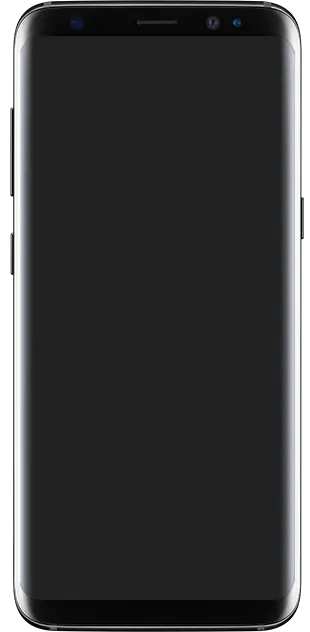
Photo: DoerNoc via Wikimedia Commons (CC BY-SA 3.0)
Samsung Galaxy S8 Plus
Samsung Galaxy S8 Plus price in: Sri Lanka · India · Pakistan · Bangladesh · Nepal · USA · Canada · UK · Australia · New Zealand · UAE · Saudi Arabia · Qatar · Kuwait · Singapore · Malaysia · Thailand · Indonesia · Philippines · Vietnam · Japan · South Korea · China · Hong Kong · Germany · France · Italy · Spain · Netherlands · Ireland · Portugal · Sweden · Norway · Denmark · Switzerland · Poland · Turkey · Russia · South Africa · Nigeria · Kenya · Egypt · Ghana · Brazil · Mexico · Argentina · Chile · Colombia
Samsung Galaxy S8 Plus Price
The Samsung Galaxy S8 Plus lowest price is $99, based on current retailer listings.
Full Specifications
Display
| Type | Super AMOLED capacitive touchscreen, 16M colors |
| Size | 6.2 inches, 98.3 cm² (~84.0% screen-to-body ratio) |
| Resolution | 1440 x 2960 pixels, 18.5:9 ratio (~529 ppi density) |
| Protection | Corning Gorilla Glass 5 |
| Features | HDR10 compliant, Always-on display, 3D curved glass screen, Force Touch (home button only) |
Platform
| OS | Android 7.0 (Nougat), upgradable to Android 9.0 (Pie), One UI |
| Chipset (International) | Exynos 8895 Octa |
| Chipset (USA/China) | Qualcomm MSM8998 Snapdragon 835 |
| CPU (Exynos) | Octa-core (4x2.3 GHz M2 Mongoose & 4x1.7 GHz Cortex-A53) |
| CPU (Snapdragon) | Octa-core (4x2.35 GHz Kryo & 4x1.9 GHz Kryo) |
| GPU (Exynos) | Mali-G71 MP20 |
| GPU (Snapdragon) | Adreno 540 |
Memory
| RAM | 4GB |
| Internal Storage | 64GB |
| Card Slot | microSDXC (dedicated slot up to 256GB) |
Main Camera
| Resolution | 12 MP, f/1.7, 26mm (wide), 1/2.55", 1.4µm, Dual Pixel PDAF, OIS |
| Features | LED flash, auto-HDR, panorama |
| Video | 4K@30fps, 1080p@60fps, 720p@240fps, HDR, dual-video rec. |
Selfie Camera
| Resolution | 8 MP, f/1.7, 25mm (wide), 1/3.6", 1.22µm, AF |
| Features | Dual video call, Auto-HDR |
Battery
| Type | Non-removable Li-Ion 3500 mAh |
| Charging | Fast charging 15W (Quick Charge 2.0), Qi/PMA wireless charging |
Body
| Dimensions | 159.5 x 73.4 x 8.1 mm |
| Weight | 173 g |
| Build | Glass front (Gorilla Glass 5), glass back (Gorilla Glass 5), aluminum frame |
| SIM | Single SIM (Nano-SIM) or Hybrid Dual SIM (Nano-SIM, dual stand-by) |
| Water & Dust Resistance | IP68 dust/water resistant (up to 1.5m for 30 min) |
Comms
| WLAN | Wi-Fi 802.11 a/b/g/n/ac, dual-band, Wi-Fi Direct, hotspot |
| Bluetooth | 5.0, A2DP, LE, aptX |
| GPS | Yes, with A-GPS, GLONASS, BDS, GALILEO |
| NFC | Yes |
| USB | USB Type-C 3.1 |
Launch
| Announced | March 29, 2017 |
| Status | Available. Released April 21, 2017 |
Pros & Cons
Pros
- Stunning and immersive Infinity Display with minimal bezels.
- Premium and elegant glass and metal design with IP68 water resistance.
- Excellent camera performance in well-lit conditions for its generation.
- Good battery life for a flagship phone of its era.
- Includes expandable storage via microSD card and a 3.5mm headphone jack.
Cons
- Awkwardly placed fingerprint sensor next to the camera.
- Dedicated Bixby button was often criticized and not remappable at launch.
- Fragile all-glass design is prone to damage without proper protection.
- No longer receives official software or security updates, posing security risks.
- Performance and camera capabilities are significantly outmatched by modern smartphones.
In The Box & Warranty
- Samsung Galaxy S8 Plus handset
- USB-C cable
- Adaptive Fast Charging wall adapter
- AKG-tuned earbuds with extra ear tips
- USB connector (USB-A to USB-C adapter)
- SIM ejector tool
Samsung typically provides a 12-month limited warranty for its mobile devices, covering manufacturing defects.
Questions & Answers
When was the Samsung Galaxy S8 Plus released?
The Samsung Galaxy S8 Plus was officially released on April 21, 2017.
Is the Samsung Galaxy S8 Plus waterproof?
Yes, the Samsung Galaxy S8 Plus is IP68 certified, meaning it is resistant to dust and can be submerged in up to 1.5 meters of water for 30 minutes.
Does the Samsung Galaxy S8 Plus have a headphone jack?
Yes, the Samsung Galaxy S8 Plus features a 3.5mm headphone jack.
Can the storage on the Samsung Galaxy S8 Plus be expanded?
Yes, the Samsung Galaxy S8 Plus has a microSDXC card slot, allowing for expandable storage up to 256GB.
Is the Samsung Galaxy S8 Plus still receiving software updates?
No, Samsung officially ended software and security support for the Galaxy S8 Plus in 2021.
What are the main camera specifications of the Galaxy S8 Plus?
The main camera on the Galaxy S8 Plus is a 12 MP Dual Pixel sensor with an f/1.7 aperture, optical image stabilization (OIS), and PDAF, capable of recording 4K video.