
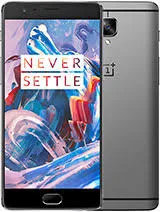
Photo: Santeri Viinamäki via Wikimedia Commons (CC BY-SA 4.0)
OnePlus 3 Price in the UK
OnePlus 3 Price in the UK
The OnePlus 3 price in the UK starts at £65, the lowest of 2 shops in the UK we compared. Prices last checked on ; confirm the price, stock and warranty with the shop before buying.
Buying the OnePlus 3 in the UK
The lowest OnePlus 3 price in the UK is £65 at CeX, out of 2 shops we compared (checked 19 September 2026).
- Warranty: check whether the phone comes with the official warranty in the UK or is an imported (international) unit. Imports can be cheaper but may not be covered by local service centres.
- Network bands: make sure the model sold in the UK supports your carrier's 4G/5G bands — see the Network section of the specs below.
- Before you pay: confirm the price, stock, storage/RAM version and colour with the shop, as prices change often.
What is the OnePlus 3 price in the UK?
The OnePlus 3 price in the UK starts at £65, the lowest shop price we found.
Where can I buy the OnePlus 3 in the UK?
Shops in the UK listing the OnePlus 3 include CeX, Back Market. See the price list above for each shop's price and link.
Full Specifications
Display
| Type | Optic AMOLED |
| Size | 5.5 inches, 83.4 cm2 (~73.1% screen-to-body ratio) |
| Resolution | 1080 x 1920 pixels, 16:9 ratio (~401 ppi density) |
| Protection | Corning Gorilla Glass 4 |
Platform
| OS | Android 6.0.1 (Marshmallow), upgradable to Android 9.0 (Pie) |
| Chipset | Qualcomm MSM8996 Snapdragon 820 (14 nm) |
| CPU | Quad-core (2x2.15 GHz Kryo & 2x1.6 GHz Kryo) |
| GPU | Adreno 530 |
Memory
| Card slot | No |
| Internal | 64GB 6GB RAM |
Main Camera
| Modules | 16 MP, f/2.0, 1/2.8", 1.12µm, PDAF, OIS |
| Features | LED flash, panorama, HDR |
| Video | 4K@30fps, 1080p@30/60fps, 720p@120fps, Auto HDR |
Selfie Camera
| Modules | 8 MP, f/2.0, 1/3.2", 1.4µm |
| Video | 1080p@30fps |
Battery
| Type | Li-Ion 3000 mAh, non-removable |
| Charging | 20W wired (Dash Charge) |
Body
| Dimensions | 152.7 x 74.7 x 7.4 mm (6.01 x 2.94 x 0.29 in) |
| Weight | 158 g (5.57 oz) |
| Build | Glass front (Corning Gorilla Glass 4), aluminum back, aluminum frame |
Comms
| WLAN | Wi-Fi 802.11 a/b/g/n/ac, Wi-Fi Direct, DLNA |
| Bluetooth | 4.2, A2DP, LE, aptX HD |
| Positioning | GPS, GLONASS, BDS |
| NFC | Yes |
| USB | USB Type-C 2.0 |
Launch
| Announced | 2016, June |
| Status | Discontinued |
Pros & Cons
Pros
- Excellent performance for its price point
- Premium aluminum build quality
- Fast and efficient Dash Charge technology
- Smooth OxygenOS experience
- Good camera in well-lit conditions
Cons
- Display resolution is 1080p, not Quad HD like some competitors
- No expandable storage via microSD card
- Low-light camera performance could be improved
- Discontinued, limiting official support and updates
- Battery capacity is average for its time
In The Box & Warranty
- OnePlus 3 smartphone
- Dash Charge Type-C cable
- Dash Charge power adapter
- SIM ejector tool
- Quick start guide
- Safety information
Typically came with a standard manufacturer's warranty at the time of purchase.
Questions & Answers
When was the OnePlus 3 released?
The OnePlus 3 was officially revealed on June 14, 2016, and released in the same month.
Does the OnePlus 3 support 5G connectivity?
No, the OnePlus 3 was released in 2016 and supports up to 4G LTE networks. It does not have 5G capabilities.
Can the storage on the OnePlus 3 be expanded?
No, the OnePlus 3 comes with 64GB of internal storage and does not feature a microSD card slot for expandable memory.
What is Dash Charge on the OnePlus 3?
Dash Charge is OnePlus's proprietary fast-charging technology that came with the OnePlus 3, capable of providing a day's power in about half an hour with its 20W wired charging.
What operating system does the OnePlus 3 run?
The OnePlus 3 launched with Android 6.0.1 Marshmallow and was officially upgradable to Android 9.0 Pie.
Is the OnePlus 3 still a good phone to buy today?
While it offered excellent value and performance in its time, the OnePlus 3 is an older device (released 2016) and is no longer supported with modern software updates or security patches. It's generally not recommended as a primary device today due to potential compatibility and security issues, but could serve as a secondary phone or for collectors.