
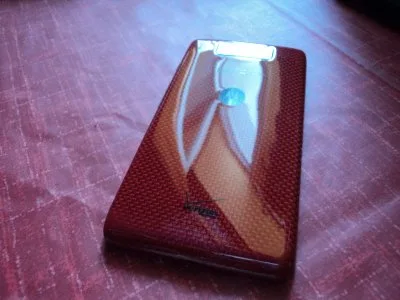
Photo: Eleverse via Wikimedia Commons (CC BY-SA 4.0)
Motorola Droid 4 (XT894)
Motorola Droid 4 (XT894) price in: Sri Lanka · India · Pakistan · Bangladesh · Nepal · USA · Canada · UK · Australia · New Zealand · UAE · Saudi Arabia · Qatar · Kuwait · Singapore · Malaysia · Thailand · Indonesia · Philippines · Vietnam · Japan · South Korea · China · Hong Kong · Germany · France · Italy · Spain · Netherlands · Ireland · Portugal · Sweden · Norway · Denmark · Switzerland · Poland · Turkey · Russia · South Africa · Nigeria · Kenya · Egypt · Ghana · Brazil · Mexico · Argentina · Chile · Colombia
Motorola Droid 4 (XT894) Price
The Motorola Droid 4 (XT894) lowest price is $5,451, based on current retailer listings.
- eBay (Seller with 99.7% positive feedback) Lowest Price $5,451 Visit →
Full Specifications
Display
| Type | TFT LCD |
| Size | 4.0 inches |
| Resolution | 540 x 960 pixels (qHD) |
| Protection | Corning Gorilla Glass |
Platform
| Chipset | TI OMAP 4430 |
| CPU | Dual-core 1.2 GHz Cortex-A9 |
| GPU | PowerVR SGX540 |
Memory
| Card slot | microSDHC, up to 32 GB |
| Internal | 16GB storage, 1GB RAM |
Main Camera
| Modules | 8 MP, autofocus, LED flash |
| Features | Geotagging, digital zoom |
| Video | 1080p@30fps |
Selfie Camera
| Modules | 1.3 MP |
| Video | 720p |
Battery
| Type | Li-Ion 1785 mAh, non-removable |
| Talk time | Up to 12 h 30 min (3G) |
| Stand-by | Up to 200 h (3G) |
Body
| Dimensions | 127 x 67.3 x 12.7 mm (5.0 x 2.65 x 0.5 in) |
| Weight | 180 g (6.3 oz) |
| SIM | Micro-SIM |
| Keyboard | Slide-out 5-row QWERTY keyboard |
Comms
| WLAN | Wi-Fi 802.11 b/g/n, DLNA |
| Bluetooth | 4.0, A2DP, LE |
| USB | microUSB 2.0 |
| HDMI | microHDMI port |
Launch
| Announced | January 2012 |
| Status | Released February 2012 |
| OS (initial) | Android 2.3.5 (Gingerbread) |
| OS (upgradable) | Up to Android 4.1.2 (Jelly Bean) |
Pros & Cons
Pros
- Excellent and spacious slide-out QWERTY keyboard with a dedicated number row.
- Fast 4G LTE connectivity for its time.
- Solid build quality and durable design.
- Good call quality.
- HDMI output for connecting to external displays.
Cons
- Display resolution and quality were considered average compared to competitors.
- Non-removable battery, limiting user replacement.
- Initial Android 2.3 Gingerbread OS was outdated at launch, though upgradable.
- Relatively thick and heavy due to the sliding keyboard mechanism.
- Camera performance could be inconsistent, sometimes producing washed-out pictures.
In The Box & Warranty
- Motorola Droid 4 Handset
- Wall Charger (USB AC adapter)
- USB to microUSB Cable
- Micro-SIM card (pre-installed by carrier)
- Documentation (manuals, safety guide)
- SIM ejector tool (or similar key for battery door)
Motorola typically offers a one-year limited warranty covering manufacturing defects for its devices.
Questions & Answers
What is the main highlight of the Motorola Droid 4?
The main highlight of the Motorola Droid 4 is its full five-row slide-out QWERTY keyboard, which was highly regarded for its tactile feedback and dedicated number row, combined with 4G LTE connectivity.
When was the Motorola Droid 4 released?
The Motorola Droid 4 was officially released on February 10, 2012, on Verizon Wireless.
Does the Motorola Droid 4 have a physical keyboard?
Yes, the Motorola Droid 4 features a prominent slide-out, five-row physical QWERTY keyboard, which was one of its defining characteristics.
What operating system did the Motorola Droid 4 run?
The Motorola Droid 4 initially launched with Android 2.3.5 (Gingerbread) and was officially upgradable to Android 4.1.2 (Jelly Bean).
Is the battery in the Motorola Droid 4 removable?
No, the 1785 mAh Li-Ion battery in the Motorola Droid 4 is non-removable, meaning it cannot be easily replaced by the user.
What kind of network connectivity does the Droid 4 support?
The Motorola Droid 4 supported CDMA, EVDO Rev. A, and 4G LTE networks, primarily on Verizon Wireless, offering fast data speeds for its time.