
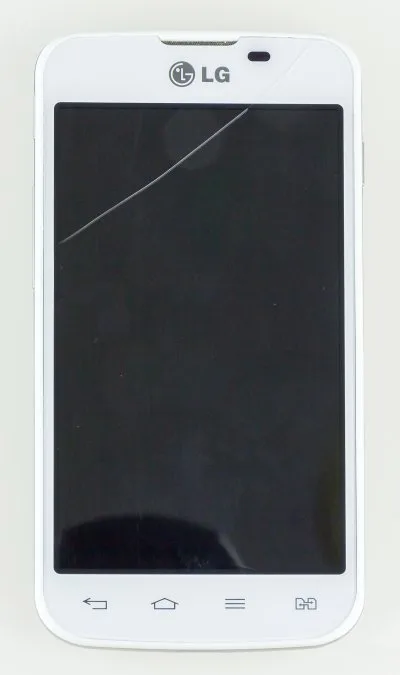
Photo: Raimond Spekking via Wikimedia Commons (CC BY-SA 4.0)
LG Optimus L5 II
LG Optimus L5 II price in: Sri Lanka · India · Pakistan · Bangladesh · Nepal · USA · Canada · UK · Australia · New Zealand · UAE · Saudi Arabia · Qatar · Kuwait · Singapore · Malaysia · Thailand · Indonesia · Philippines · Vietnam · Japan · South Korea · China · Hong Kong · Germany · France · Italy · Spain · Netherlands · Ireland · Portugal · Sweden · Norway · Denmark · Switzerland · Poland · Turkey · Russia · South Africa · Nigeria · Kenya · Egypt · Ghana · Brazil · Mexico · Argentina · Chile · Colombia
LG Optimus L5 II Price
The LG Optimus L5 II lowest price is $1,044, based on current retailer listings.
- eBay Lowest Price $1,044 Visit →
Full Specifications
Display
| Type | IPS LCD capacitive touchscreen, 16M colors |
| Size | 4.0 inches |
| Resolution | 480 x 800 pixels |
| Pixel density | ~233 ppi |
Platform
| OS | Android 4.1.2 (Jelly Bean) |
| Chipset | MediaTek MT6575 |
| CPU | 1 GHz Cortex-A9 (single-core) |
| GPU | PowerVR SGX531 |
Memory
| Card slot | microSDHC, up to 32 GB (dedicated slot) |
| Internal | 4 GB (1.4 GB user available), 512 MB RAM |
Main Camera
| Single | 5 MP, autofocus |
| Features | LED flash |
| Video | 480p |
Selfie Camera
| Single | No |
Battery
| Type | Removable Li-Ion 1700 mAh battery |
| Stand-by | Up to 600 h (2G) / Up to 550 h (3G) |
| Talk time | Up to 10 h (2G) / Up to 9 h (3G) |
Body
| Dimensions | 117.5 x 62.2 x 9.2 mm (4.63 x 2.45 x 0.36 in) |
| Weight | 103 g (3.63 oz) |
| SIM | Single SIM (Regular-SIM) or Dual SIM (E455 variant) |
Comms
| WLAN | Wi-Fi 802.11 b/g/n, Wi-Fi Direct |
| Bluetooth | 3.0, A2DP |
| GPS | Yes, with A-GPS |
| NFC | Yes (model E460) |
| Radio | FM radio with RDS |
| USB | microUSB 2.0 |
Launch
| Announced | 2013, February |
| Released | 2013, April |
Pros & Cons
Pros
- Compact and lightweight design
- IPS display offers decent viewing angles for its class
- Removable battery
- Dedicated microSD card slot for storage expansion
- Affordable price point at launch
Cons
- Limited internal storage (4GB, with only 1.4GB user available)
- Low RAM (512MB) leading to performance issues with modern apps
- No front-facing camera
- Outdated Android version (4.1) with no further official updates
- Camera performance is basic and struggles in low light
- Lack of touch vibration and poor sound quality reported by some users
In The Box & Warranty
- LG Optimus L5 II Handset
- Battery
- Charger
- USB Cable
- Headset
- Quick Start Guide
Typically, a one-year limited manufacturer's warranty covered the device at the time of purchase.
Questions & Answers
When was the LG Optimus L5 II released?
The LG Optimus L5 II was announced in February 2013 and released in April 2013.
What operating system does the LG Optimus L5 II run?
It originally ran on Android 4.1.2 Jelly Bean.
Does the LG Optimus L5 II have a front camera?
No, the LG Optimus L5 II does not feature a front-facing camera.
Can the storage on the LG Optimus L5 II be expanded?
Yes, it has a microSDHC card slot that supports expansion up to 32 GB.
Is the battery of the LG Optimus L5 II removable?
Yes, the LG Optimus L5 II comes with a removable Li-Ion 1700 mAh battery.
What are the main limitations of the LG Optimus L5 II today?
Its main limitations include an outdated Android version, very limited RAM (512MB), small internal storage (4GB), and basic camera performance, making it unsuitable for most modern applications and daily use.