
Photo: Kyu3a via Wikimedia Commons (CC BY-SA 4.0)
Google Pixel 4
Google Pixel 4 price in: Sri Lanka · India · Pakistan · Bangladesh · Nepal · USA · Canada · UK · Australia · New Zealand · UAE · Saudi Arabia · Qatar · Kuwait · Singapore · Malaysia · Thailand · Indonesia · Philippines · Vietnam · Japan · South Korea · China · Hong Kong · Germany · France · Italy · Spain · Netherlands · Ireland · Portugal · Sweden · Norway · Denmark · Switzerland · Poland · Turkey · Russia · South Africa · Nigeria · Kenya · Egypt · Ghana · Brazil · Mexico · Argentina · Chile · Colombia
Google Pixel 4 Price
The Google Pixel 4 lowest price is $109, based on current retailer listings.
Full Specifications
Display
| Type | P-OLED, 90Hz, HDR, 100% DCI-P3, Always-on display, Ambient EQ |
| Size | 5.7 inches, 80.4 cm² (~79.8% screen-to-body ratio) |
| Resolution | 1080 x 2280 pixels, 19:9 ratio (~444 ppi density) |
| Protection | Corning Gorilla Glass 5 |
Platform
| OS | Android 10, upgradable to Android 13 |
| Chipset | Qualcomm Snapdragon 855 (7 nm) |
| CPU | Octa-core (1x2.84 GHz Kryo 485 & 3x2.42 GHz Kryo 485 & 4x1.78 GHz Kryo 485) |
| GPU | Adreno 640 |
| Coprocessor | Pixel Neural Core |
Memory
| RAM | 6GB LPDDR4X |
| Internal Storage | 64GB or 128GB UFS 2.1 |
| Card Slot | No |
Main Camera
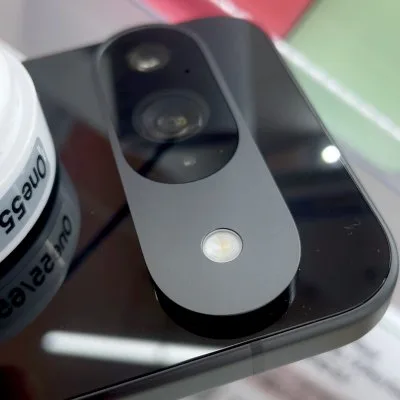
| Dual | 12.2 MP, f/1.7, 27mm (wide), 1/2.55", 1.4µm, dual pixel PDAF, OIS; 16 MP, f/2.4, 48mm (telephoto), 1/3.6", 1.0µm, PDAF, OIS, 2x optical zoom |
| Features | Dual-LED flash, Pixel Shift, Auto-HDR, panorama, Live HDR+, Super Res Zoom, Night Sight with Astrophotography |
| Video | 4K@30fps, 1080p@30/60/120fps, 720p@240fps |
Selfie Camera
| Single | 8 MP, f/2.0, 22mm (ultrawide, 90°), 1.22µm |
| Features | Auto-HDR, TOF 3D sensor |
| Video | 1080p@30fps |
Battery
| Type | Li-Po 2800 mAh, non-removable |
| Charging | 18W wired (USB Power Delivery 2.0), 11W Qi wireless |
Body
| Dimensions | 147.1 x 68.8 x 8.2 mm (5.79 x 2.71 x 0.32 in) |
| Weight | 162 g (5.71 oz) |
| Build | Glass front (Gorilla Glass 5), glass back (Gorilla Glass 5), aluminum frame |
| Water & Dust Resistance | IPX8 (up to 1.5m for 30 min) |
Comms
| WLAN | Wi-Fi 802.11 a/b/g/n/ac, dual-band, Wi-Fi Direct, DLNA, hotspot |
| Bluetooth | 5.0, A2DP, LE, aptX HD |
| Positioning | GPS, GLONASS, BDS, GALILEO |
| NFC | Yes |
| USB | USB Type-C 3.1 |
Launch
| Announced | October 15, 2019 |
| Status | Discontinued (August 6, 2020) |
Pros & Cons
Pros
- Outstanding camera performance, especially in low light and with portrait mode
- Fluid and vibrant 90Hz OLED display
- Clean Android experience with prompt software updates
- Compact and comfortable design for one-handed use
- Useful Motion Sense gestures and Face Unlock
Cons
- Below-average battery life compared to competitors
- No ultrawide camera lens
- Limited storage options with no expandable memory
- Motion Sense functionality was limited and not widely adopted
- High launch price for its specifications
In The Box & Warranty
- Google Pixel 4 Handset
- 18W USB-C Power Adapter
- 1M USB-C to USB-C Cable
- Quick Switch Adapter (USB-A to USB-C)
- SIM tool
- Quick Start Guide and Safety Information
Google typically offers a one-year limited warranty for its Pixel phones, covering defects in materials and workmanship.
Questions & Answers
When was the Google Pixel 4 released?
The Google Pixel 4 was officially released on October 24, 2019.
What are the main camera specifications of the Pixel 4?
The Pixel 4 features a dual-camera system with a 12.2 MP wide lens (f/1.7) and a 16 MP telephoto lens (f/2.4) with 2x optical zoom. It's renowned for its computational photography, including Night Sight and Astrophotography.
Does the Google Pixel 4 have a 90Hz display?
Yes, the Google Pixel 4 features a 5.7-inch P-OLED display with a 90Hz refresh rate, which Google marketed as 'Smooth Display,' providing a more fluid scrolling and gaming experience.
What processor powers the Google Pixel 4?
The Google Pixel 4 is powered by the Qualcomm Snapdragon 855 chipset, coupled with an Adreno 640 GPU and Google's dedicated Pixel Neural Core for enhanced AI and image processing.
What is Motion Sense on the Pixel 4?
Motion Sense is a feature on the Pixel 4 that uses a Soli radar chip to detect gestures above the phone, allowing users to skip songs, snooze alarms, and dismiss calls without touching the device.
Is the Google Pixel 4 still a good phone to buy in 2024?
While no longer sold new, the Pixel 4 can still be a good option for those prioritizing an excellent camera and a clean Android experience at a low price. However, its battery life is a significant drawback, and software updates have ended with Android 13.