
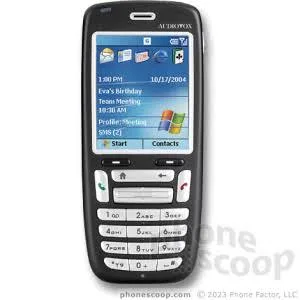
Audiovox SMT5600
Audiovox SMT5600 price in: Sri Lanka · India · Pakistan · Bangladesh · Nepal · USA · Canada · UK · Australia · New Zealand · UAE · Saudi Arabia · Qatar · Kuwait · Singapore · Malaysia · Thailand · Indonesia · Philippines · Vietnam · Japan · South Korea · China · Hong Kong · Germany · France · Italy · Spain · Netherlands · Ireland · Portugal · Sweden · Norway · Denmark · Switzerland · Poland · Turkey · Russia · South Africa · Nigeria · Kenya · Egypt · Ghana · Brazil · Mexico · Argentina · Chile · Colombia
Audiovox SMT5600 Price
The Audiovox SMT5600 lowest price is $120, based on current retailer listings.
Full Specifications
Display
| Type | TFT, 65K colors |
| Size | 2.2 inches |
| Resolution | 176 x 220 pixels |
Platform
| OS | Windows Mobile 2003 Second Edition for Smartphones |
| Chipset | Texas Instruments OMAP 730 |
| CPU | 200 MHz |
Memory
| Internal | 32MB RAM, 64MB ROM |
| Card slot | miniSD (up to 256MB/512MB) |
Main Camera
| Single | 0.3 MP (VGA) |
| Features | Video capture |
| Video | Yes (640x480 with audio) |
Selfie Camera
| Single | No |
Battery
| Type | Removable Li-Ion |
| Capacity | 1050 mAh |
| Talk time | Up to 4 hours (rated), 7 hours (tested) |
| Standby time | Up to 140 hours (rated), 8 days (tested) |
Body
| Dimensions | 107.95 x 45.72 x 17.78 mm (4.25 x 1.81 x 0.7 inches) |
| Weight | 102 g (3.6 oz) |
| SIM | Mini-SIM |
Comms
| WLAN | No |
| Bluetooth | Yes |
| GPS | No |
| Infrared | Yes |
| USB | mini-USB |
Launch
| Announced | October 2004 |
| Status | Discontinued |
Pros & Cons
Pros
- Small and sleek design
- Excellent music and video support via Windows Media Player 10
- Strong integration with Microsoft Outlook for PIM data and email
- Good battery life for a smartphone of its time
- Bluetooth connectivity
Cons
- Poor camera quality (VGA, soft-focus, washed-out pictures)
- miniSD slot awkwardly placed behind the battery
- Cannot play music or video over Bluetooth headsets
- Tiny buttons
- Requires third-party software for viewing PDF and Microsoft Office attachments
In The Box & Warranty
- Audiovox SMT5600 Handset
- Battery
- mini-USB cable
- Wired headset
- Charger
- User Manual
Audiovox typically offered a 1-year parts and labor warranty for the SMT5600.
Questions & Answers
What operating system does the Audiovox SMT5600 run?
The Audiovox SMT5600 runs on Windows Mobile 2003 Second Edition for Smartphones.
When was the Audiovox SMT5600 released?
The Audiovox SMT5600 was released around November 2004.
Does the Audiovox SMT5600 have a camera?
Yes, it features a 0.3 MP (VGA) main camera capable of capturing both still images and video.
Can the Audiovox SMT5600 connect to modern networks?
No, the Audiovox SMT5600 only supports 2G GSM networks (850/1800/1900 MHz), which are largely phased out or have limited coverage in many regions today.
What were the key features of the Audiovox SMT5600?
Key features included its compact design, Windows Media Player 10 Mobile for multimedia, robust Microsoft Outlook synchronization, and Bluetooth connectivity.
Is the Audiovox SMT5600 suitable for daily use today?
No, due to its outdated operating system, limited connectivity, and lack of modern app support, the Audiovox SMT5600 is not suitable for daily use in the current smartphone landscape.