
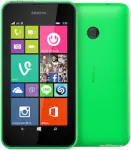
Photo: Kārlis Dambrāns via Wikimedia Commons (CC BY 2.0)
Nokia Lumia 530 Price in Nepal
Buying the Nokia Lumia 530 in Nepal
No shop in Nepal that we track has listed the Nokia Lumia 530 yet, so there is no local price for it right now. Sell this phone in Nepal? List it on infozme.com for free.
- Warranty: check whether the phone comes with the official warranty in Nepal or is an imported (international) unit. Imports can be cheaper but may not be covered by local service centres.
- Network bands: make sure the model sold in Nepal supports your carrier's 4G/5G bands — see the Network section of the specs below.
- Before you pay: confirm the price, stock, storage/RAM version and colour with the shop, as prices change often.
What is the Nokia Lumia 530 price in Nepal?
The Nokia Lumia 530 is not listed by shops in Nepal that we track yet, so there is no local price for it right now.
Where can I buy the Nokia Lumia 530 in Nepal?
We have not found a shop in Nepal selling the Nokia Lumia 530 yet. Phone shops in Nepal can list it on infozme.com for free.
Full Specifications
Display
| Type | TFT capacitive touchscreen |
| Size | 4.0 inches |
| Resolution | 480 x 854 pixels (FWVGA), ~245 ppi density |
| Protection | Not specified |
Platform
| OS | Microsoft Windows Phone 8.1 |
| Chipset | Qualcomm Snapdragon 200 |
| CPU | Quad-core 1.2 GHz Cortex-A7 |
| GPU | Adreno 302 |
Memory
| Card slot | microSDXC (dedicated slot), up to 128 GB |
| Internal RAM | 512MB RAM |
| Internal Storage | 4GB (approximately 1.73 GB user available) |
Main Camera
| Single | 5 MP, 1/4.0" sensor size, fixed focus |
| Features | No flash |
| Video | 480p@30fps |
Selfie Camera
| Single | No |
Battery
| Type | Removable Li-Ion 1430 mAh battery |
| Stand-by | Up to 528 h (2G) / Up to 528 h (3G) |
| Talk time | Up to 13 h 20 min (2G) / Up to 10 h (3G) |
| Music play | Up to 51 h |
Body
| Dimensions | 119.7 x 62.3 x 11.7 mm (4.71 x 2.45 x 0.46 in) |
| Weight | 129 g (4.55 oz) |
| SIM | Micro-SIM, available in Single SIM and Dual SIM versions |
| Materials | Plastic body with interchangeable colorful rear shells |
Comms
| WLAN | Wi-Fi 802.11 b/g/n, hotspot |
| Bluetooth | 4.0, A2DP, LE |
| GPS | Yes, with A-GPS |
| Radio | FM radio |
| USB | microUSB 2.0 |
Launch
| Announced | 2014, July |
| Status | Available. Released 2014, August |
Pros & Cons
Pros
- Very affordable price point
- Compact and easy to handle
- Expandable storage via microSD up to 128GB
- Windows Phone 8.1 OS with Microsoft services (OneDrive, Office)
- Removable battery
Cons
- Low resolution TFT display, not IPS
- Limited 512MB RAM can lead to performance issues
- Small internal storage (4GB)
- Main camera is fixed-focus and lacks flash
- No front-facing camera
- No 4G connectivity
- Overall specs were considered a downgrade compared to its predecessor, the Lumia 520, in some aspects
In The Box & Warranty
- Nokia Lumia 530 handset
- Removable 1430 mAh battery
- 2-pin charger (wall adapter)
- Headset (earphones)
- User manual
- Warranty information
Standard manufacturer's warranty information is typically included in the box.
Questions & Answers
When was the Nokia Lumia 530 released?
The Nokia Lumia 530 was announced in July 2014 and officially released in August 2014.
What operating system does the Nokia Lumia 530 run on?
The Nokia Lumia 530 runs on Microsoft's Windows Phone 8.1 operating system.
Does the Nokia Lumia 530 have a front-facing camera?
No, the Nokia Lumia 530 does not feature a front-facing camera.
Can the storage on the Nokia Lumia 530 be expanded?
Yes, the Nokia Lumia 530 supports expandable storage via a dedicated microSDXC card slot, allowing for up to 128 GB.
What are the main limitations of the Nokia Lumia 530?
Key limitations include its low 512MB RAM, small 4GB internal storage, fixed-focus main camera without a flash, lack of a front camera, and an outdated operating system with a shrinking app ecosystem.
Is the Nokia Lumia 530 recommended for purchase today?
No, the Nokia Lumia 530 is not recommended for purchase today due to its outdated software, limited performance, and lack of support for modern applications and security updates. Modern entry-level Android phones offer significantly better value and functionality.